

A. Lange & Söhne, Blog, Patek Philippe
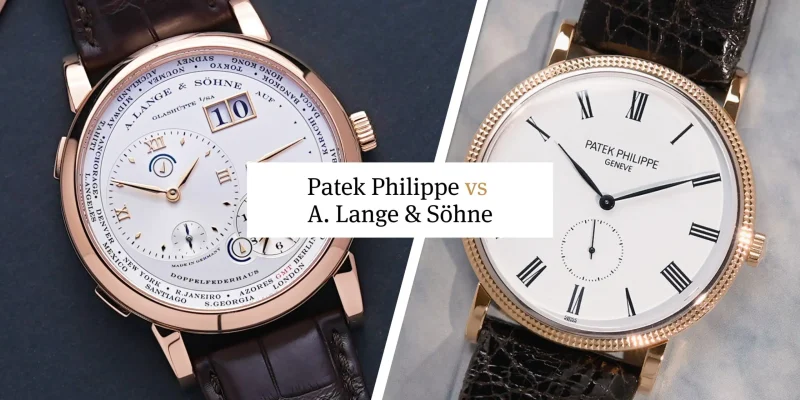
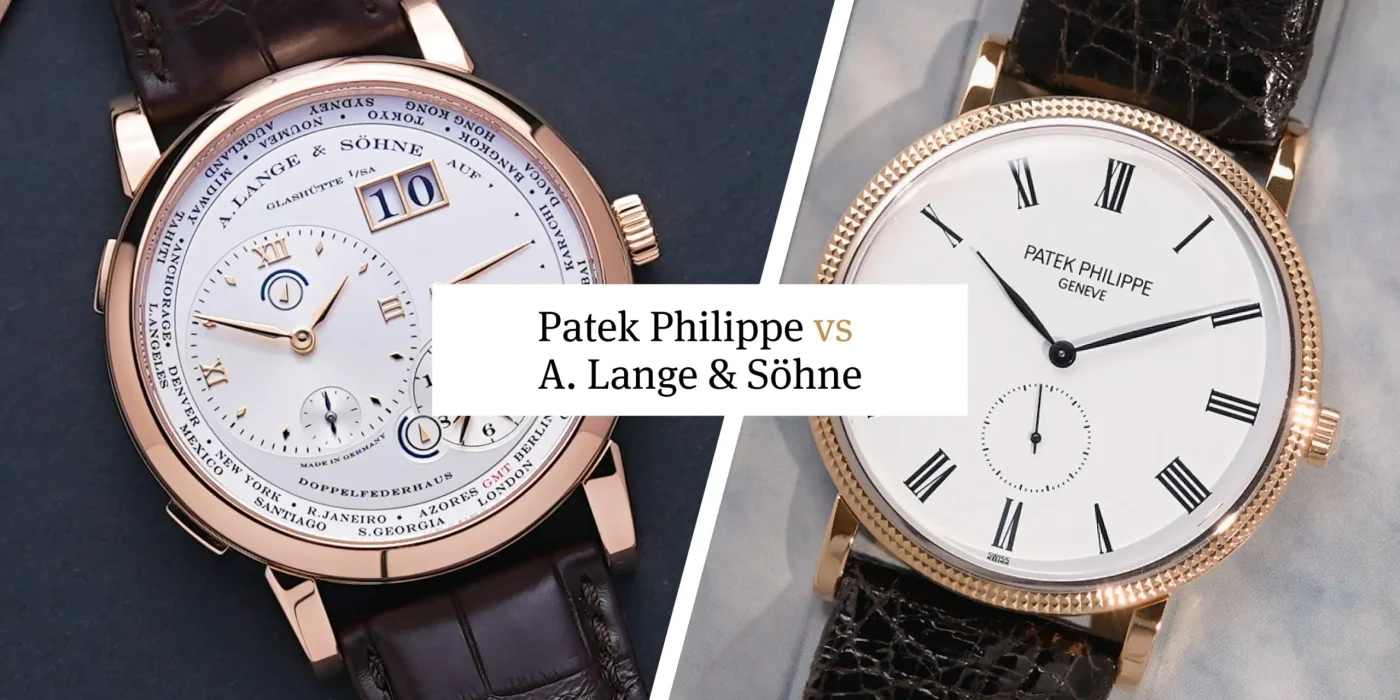
A. Lange & Söhne vs Patek Philippe: The Battle for Dress Watch Supremacy
Dec
Key Takeaways:
- Patek Philippe dominates auctions and heritage; A. Lange & Söhne excels in movement finishing and engineering perfection
- Patek produces ~60,000–70,000 watches annually; Lange makes ~5,000–7,000, making every Lange inherently rarer
- Patek wins on brand status and resale liquidity; Lange often delivers more movement for the money—especially pre-owned
The Titans of Horology: German Precision vs. Swiss Tradition
Patek Philippe represents unbroken Swiss lineage since 1839, maintaining continuous production through wars and quartz crises. Current output is estimated at 60,000–70,000 watches per year, with 2025 targets approaching 72,000 units. A. Lange & Söhne tells a different story: founded 1845, erased by WWII, reborn in 1990. Total modern production since 1994 is estimated at 80,000–90,000 watches—barely more than Patek’s single-year output.
This 12:1 production ratio creates fundamentally different market dynamics. Patek ensures auction liquidity and cultural recognition. Lange guarantees extreme scarcity and insider exclusivity.
Patek Philippe: The Unbroken Lineage of Geneva
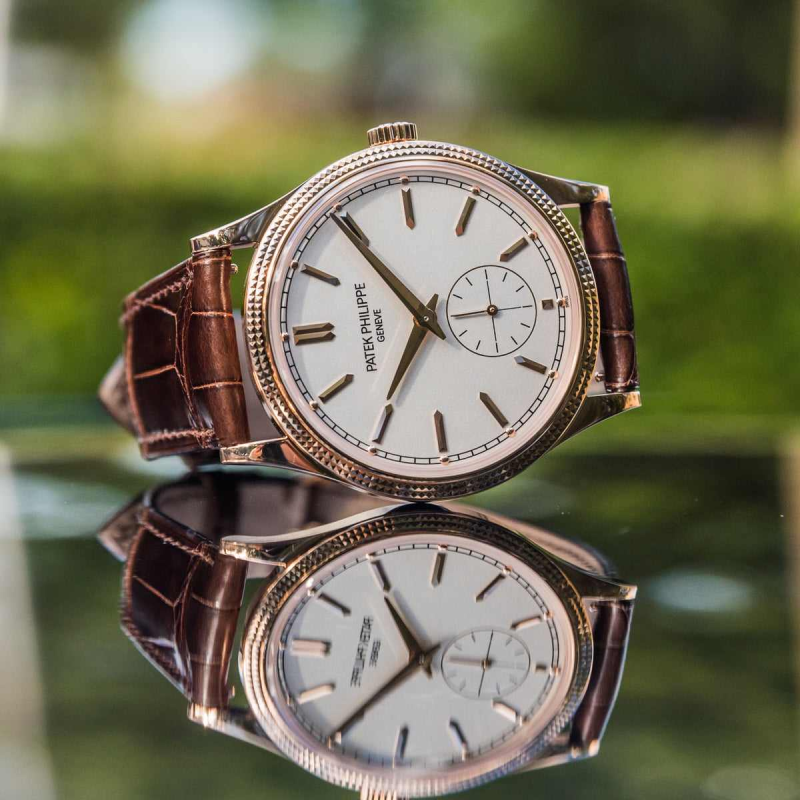
Patek’s strength is continuity plus status. The Calatrava 6119 embodies Swiss restraint: 39 mm case, 8.08 mm thickness, hand-wound caliber 30‑255 PS with 65-hour power reserve. MSRP: $29,570. Secondary market: $25,000–$28,000.
At auction, Patek is almost untouchable. Vintage chronographs and perpetual calendars routinely cross seven figures. The Nautilus “Tiffany” 5711/1A-018 achieved $6.5 million in 2021, proving brand power can push prices far beyond intrinsic horological value.
A. Lange & Söhne: The Resurrection of Glashütte
Lange’s modern history began in 1994 with four launch models, including the Lange 1. Annual production is estimated at 5,000–7,000 watches—making each piece approximately twelve times rarer than the average Patek.
Owning a modern Lange puts you in a group of perhaps 80,000–100,000 people worldwide, versus hundreds of thousands of living Patek owners. This scarcity shapes perception: less global status symbol, more insider’s choice for movement enthusiasts.
Design Philosophy and Aesthetics
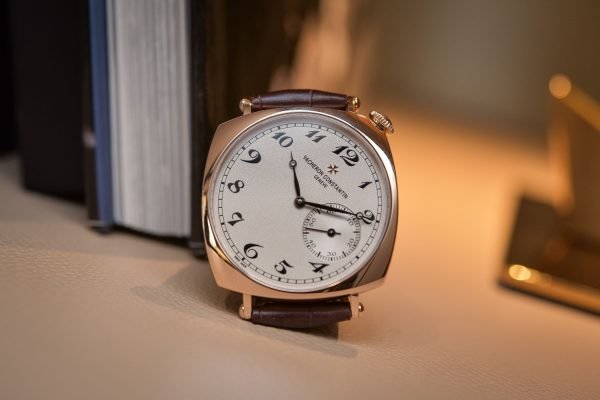
Patek’s Calatrava is about “less is more”: clean round case, restrained indices, minimal text, slim profile. It’s the watch you wear with a navy suit when you don’t want conversation, but those who know will notice.
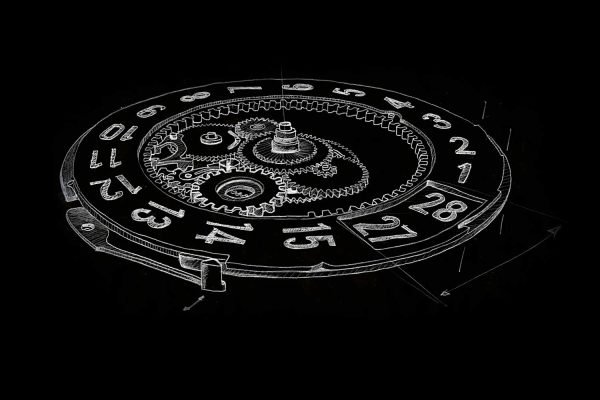
Lange’s designs are more architectural and Teutonic. The Lange 1 famously offsets its hour/minute subdial, seconds, power reserve, and big date into a mathematically balanced but asymmetric layout. Even the “simple” Saxonia Thin looks sharper—long indices, clean dial, but more visual tension.
Case Materials and Weight on the Wrist
Both brands work almost exclusively in precious metals at the dress level—rose, yellow, and white gold; platinum in higher complications. But they feel different.
Patek cases tend to be thinner and lighter. A Calatrava 6119G weighs around the high 50-gram range on strap. A comparable Saxonia Thin in pink gold often sits closer to 65–70 grams, thanks to thicker case walls and Lange’s approach to movement architecture.
On the wrist, that translates to Patek feeling like refined elegance, while Lange feels like a block of engineered metal. Some collectors love the weight; others prefer the almost invisible presence of a slim Patek.
Movement Architecture and Finishing: The Main Battlefield
This is where many purists quietly admit: Lange often wins.
Materials: German Silver vs. Rhodium-Plated Brass
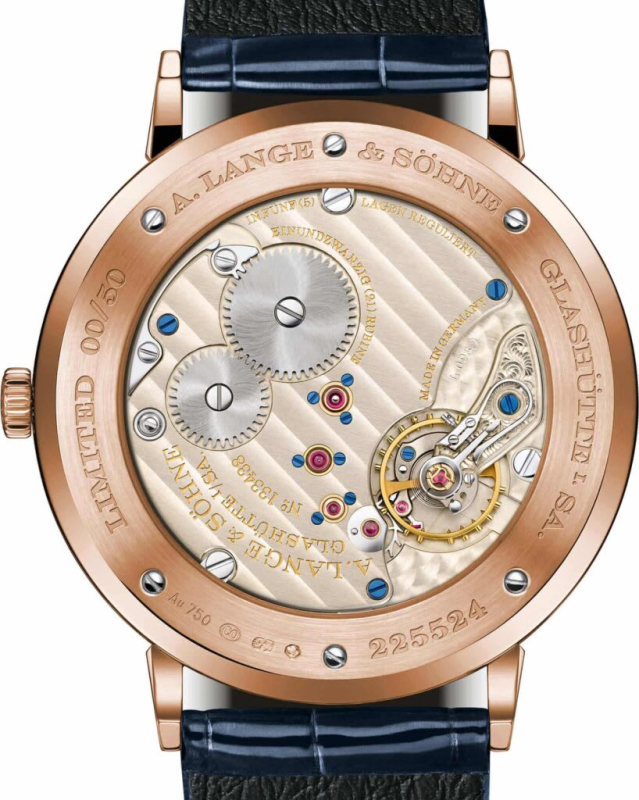
Lange uses German Silver (Maillechort)—a copper, nickel, and zinc alloy that develops a warm, slightly golden hue over time. It’s not plated, so what you see is the actual metal. It’s harder to machine and finish, but rewards with depth and patina.
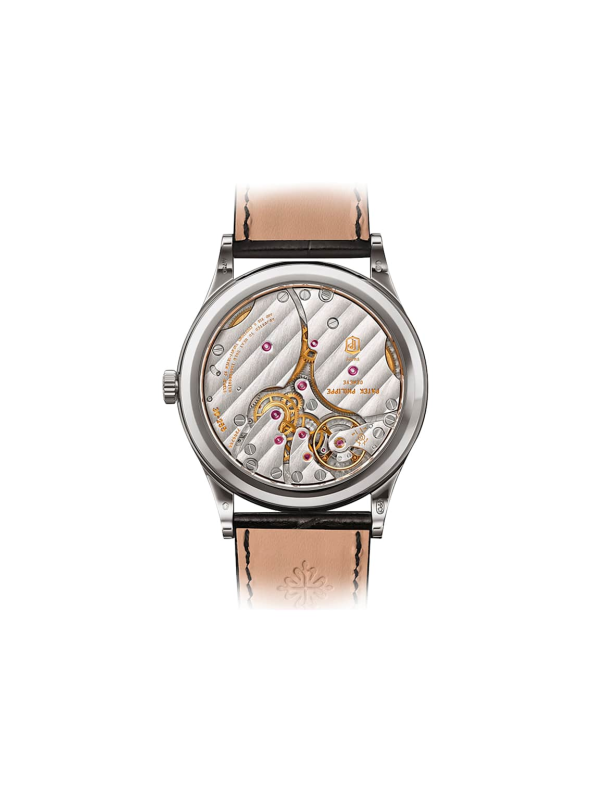
Patek typically uses rhodium-plated brass. Brass is easier to work; rhodium plating keeps the movement bright, white, and corrosion-resistant for decades. It gives that classic Geneva look, but lacks the organic warmth and aging character of German Silver.
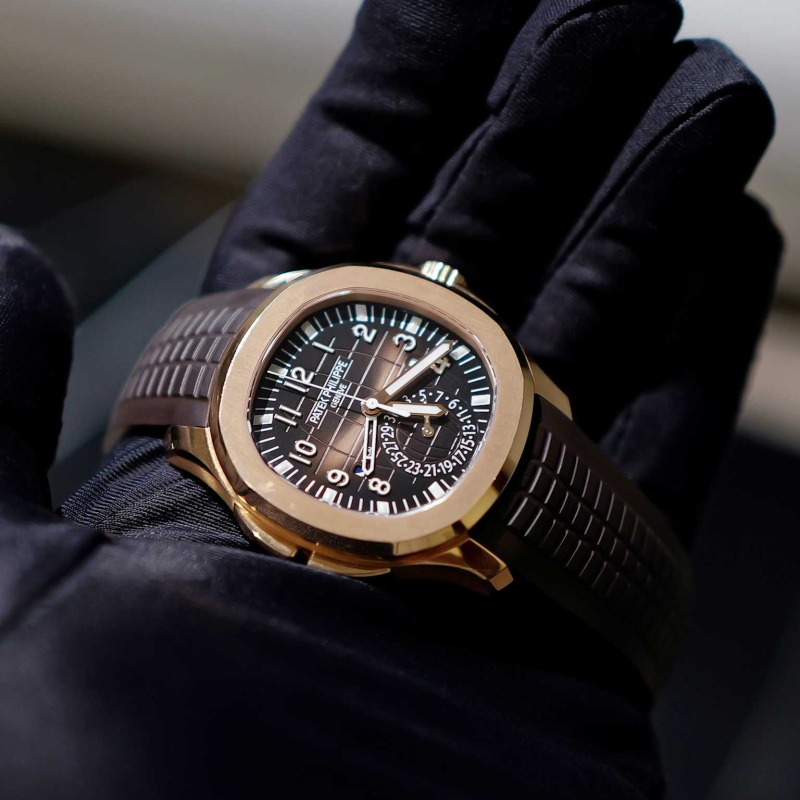
Three-Quarter Plate vs. Swiss Bridges
Flip a Lange over, and you see a three-quarter plate covering most of the gear train—a Glashütte hallmark. It looks like a single massive structural element with jewels peeking through. This layout emphasizes stability and gives the movement an almost architectural feel.
Patek favors separate bridges: one for the barrel, others for gear train and escapement. This creates a more open, airy look where you see wheels interacting. It’s visually lighter, but also more traditional in Swiss terms.
Engraved Balance Cock & Double Assembly
Every Lange watch has a hand-engraved balance cock. No two are alike; each engraver has a signature motif. That small bridge alone can take 30–45 minutes to engrave by hand under a loupe. Across 5,000 watches a year, that’s thousands of hours of skilled work dedicated to one element.
Then there’s Lange’s Double Assembly: each movement is fully assembled and regulated, then completely disassembled, cleaned, and assembled again for final finishing. This adds 30–40 hours of labor per watch and is not standard practice at Patek outside their most elite pieces.
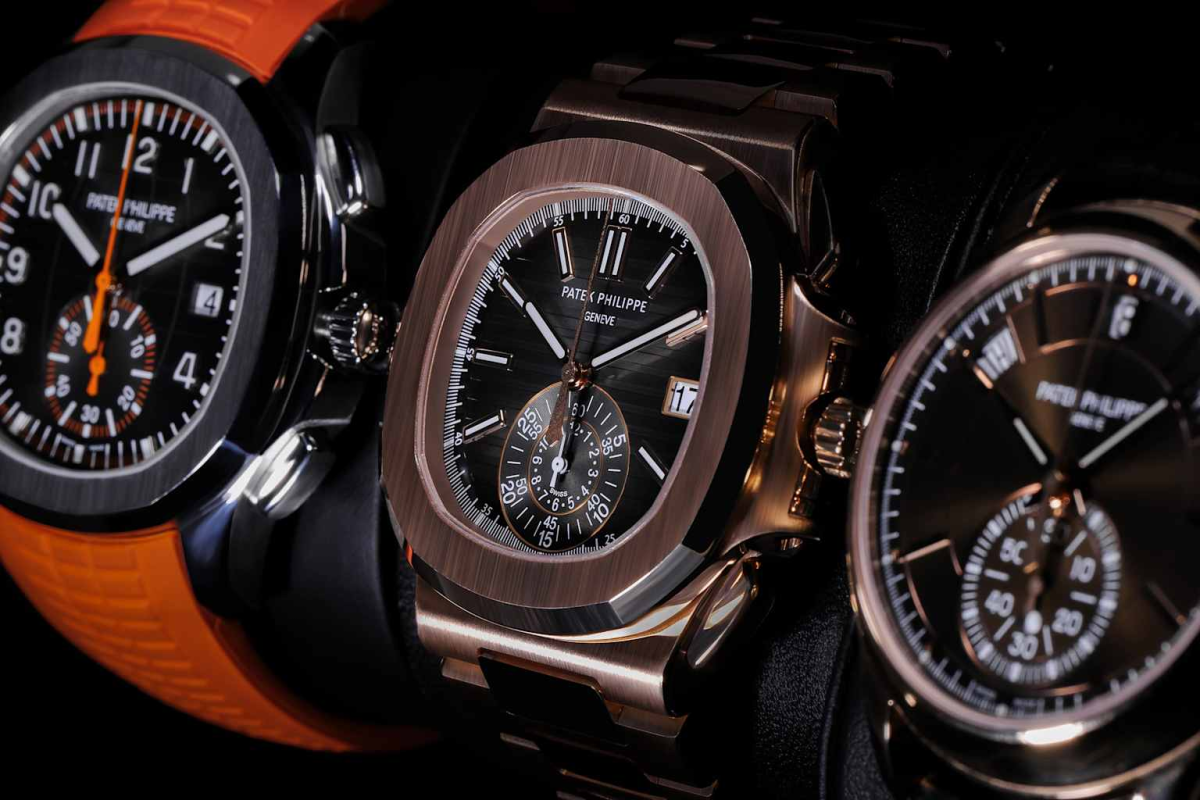
Head-to-Head Model Comparisons
Entry Level: Calatrava 6119 vs. Saxonia Thin
| Spec | Patek 6119 | Saxonia Thin |
|---|---|---|
| Diameter | 39 mm | 38.5 mm |
| Thickness | 8.08 mm | ~6.2 mm |
| Power Reserve | 65 h | 72 h |
| MSRP | $29,570 | ~$22,000 |
| Pre-Owned | $25–28k | $16–20k |
The Saxonia Thin offers more finishing and longer reserve for less money, but with weaker brand recognition and resale demand.
Chronograph Icons: Patek 5172G vs. Datograph Up/Down
Many watchmakers quietly call the Datograph the best manually wound chronograph ever made. It combines a flyback chronograph, big date, jumping minute counter, and 60+ hour power reserve, all with a breathtaking German Silver movement.
The Patek 5172G is beautiful and historically important, but most movement nerds will pick the Datograph caseback every time.
Production Numbers and Exclusivity
Patek aims for around 72,000 watches per year by 2025, up from roughly 58,000 in 2017 and 62,000 in 2022. Analysts usually quote a band of 60,000–70,000 watches annually.
Lange is on a different planet: 5,000–7,000 watches per year. A Reddit analysis combined CEO comments and estimates to suggest fewer than 80,000 modern Lange watches produced from 1994 to 2018. Even if you add recent years, we’re likely still under 90,000 total.
That makes Lange an order of magnitude rarer in absolute volume, even if Patek often feels more present in media and auctions.
Investment Value and Resale Market
Patek dominates value retention and auction records. Its watches are engineered not only as timekeepers, but as financial assets with brand-backed scarcity. Industry commentary often cites average appreciation of 7% per year across the portfolio, outperforming many traditional investments.
Lange performs differently. Pre-owned prices can be softer at retail, but this creates value opportunities. A Saxonia Thin or Lange 1 often trades 10–25% below retail on the secondary market, despite finishing that many consider superior to similarly priced Pateks.
| Aspect | Patek Philippe | A. Lange & Söhne |
|---|---|---|
| Annual Output | ~60–72k | ~5–7k |
| Total Modern Output | 1M+ | ~80–90k |
| Auction Dominance | Very high | Moderate |
| Typical Depreciation (simple dress) | ~10–20% | ~15–25% |
| Liquidity | Excellent | Good but thinner market |
Verdict: Which Brand Wins for You?
Choose Patek Philippe if you care about status, liquidity, and lineage. It’s the ultimate “everyone knows” dress watch. Your heirs will understand it, your banker will recognize it, and selling it in almost any major city will be straightforward.
Choose A. Lange & Söhne if you care about movement architecture, finishing, and rarity. If you regularly flip your watch over to stare at the back under a loupe, Lange speaks your language. The weight of German Silver, the engraved balance cock, and the double-assembly process make every piece feel like serious mechanical art.
For many serious collectors, the real answer isn’t “Patek or Lange,” but Patek for the name, Lange for the soul.
 Free Shipping for all orders