


Nov
Finding the correct serial number on your Rolex and understanding what it represents is the first critical step in verifying authenticity, determining production year, and assessing whether replacement parts have been installed. However, this process has become significantly more complicated since 2010, when Rolex abandoned sequential numbering in favor of randomized alphanumeric codes. This guide walks you through exactly where to look, how to interpret what you find, and why protecting your serial number matters more than ever.
Where to Find Your Rolex Serial Number
Your Rolex’s serial number location depends entirely on when the watch was manufactured.
Pre-2005 Models: Between the Lugs at 6 O’Clock
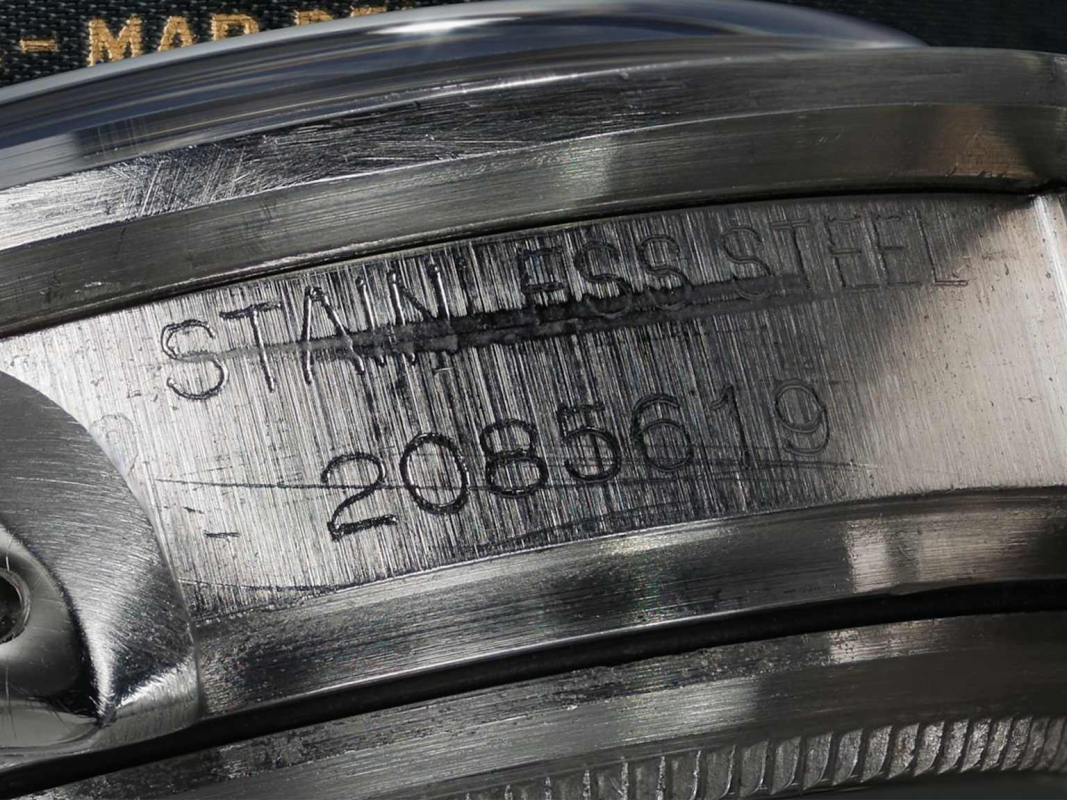
On vintage and early modern Rolex watches produced before 2005, the serial number is engraved on the exterior case between the lugs at the 6 o’clock position, directly beneath where the bracelet attaches.
To access this serial number:
- Remove the bracelet by opening the end links (requires a small screwdriver or jeweler’s tool)
- Look at the naked case between the 6 o’clock lugs
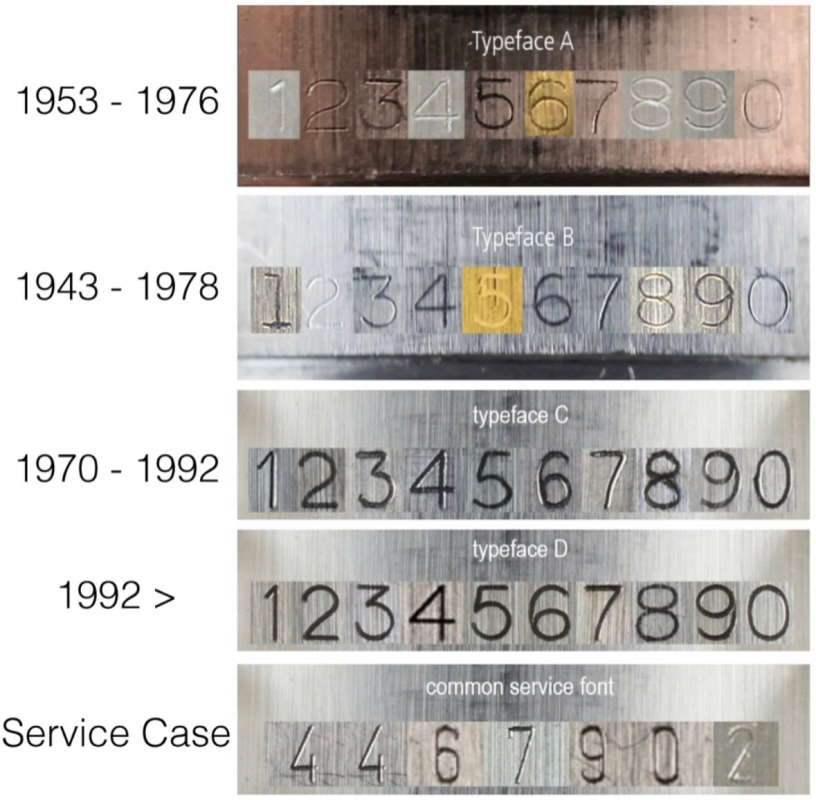
- You’ll see the serial number engraved directly on the metal—typically 4–7 digits for watches from this era
- The numbers appear slightly inset from the case surface
This location was problematic for several reasons: the serial numbers could wear away over decades of bracelet friction, making older watches difficult to date, and the position required removing the bracelet for verification.
2005–2008 Transition Period: Dual Locations
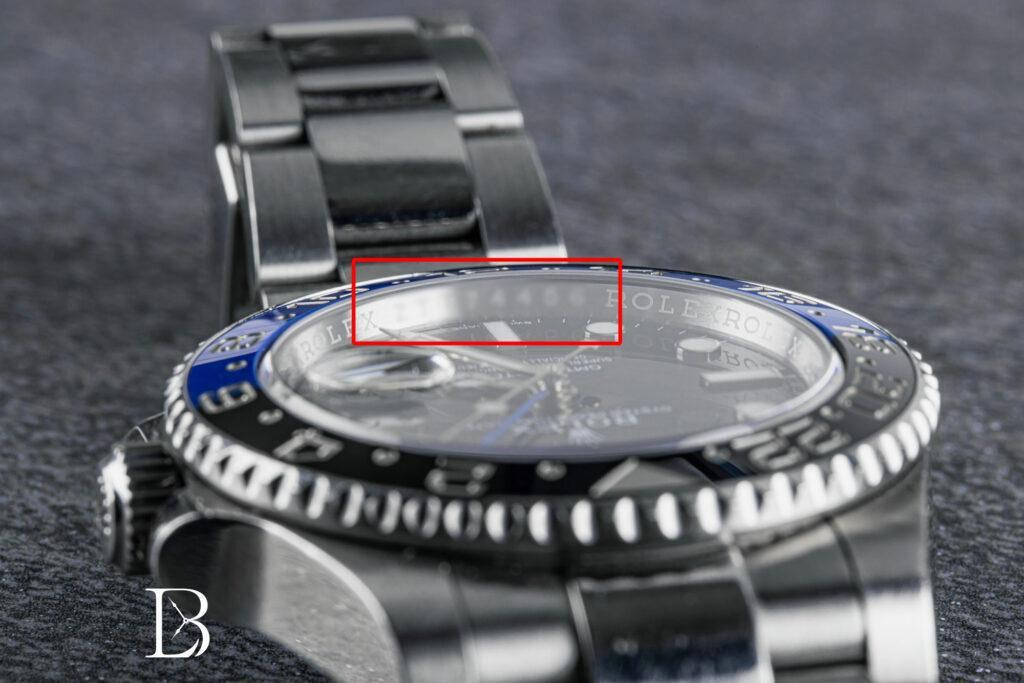
Between 2005 and 2008, Rolex transitioned to a new system by engraving serial numbers in both locations simultaneously—between the lugs AND on the rehaut (inner bezel ring).
During this transition period, you should see:
- External location (between lugs at 6 o’clock): Traditional engraving
- Internal location (rehaut): Laser-engraved on the inner bezel ring just inside the crystal at 6 o’clock
Both numbers should match exactly.
2008–Present: Rehaut Location Only
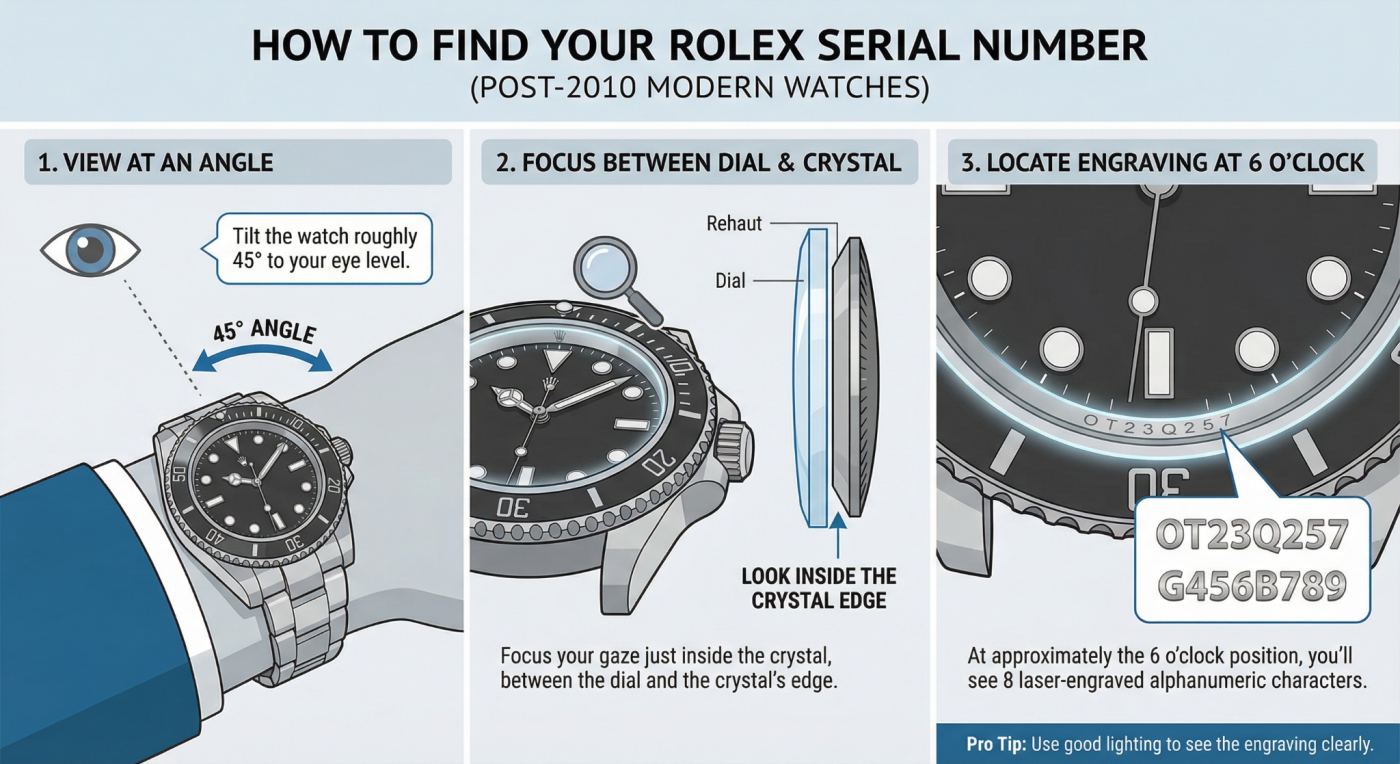
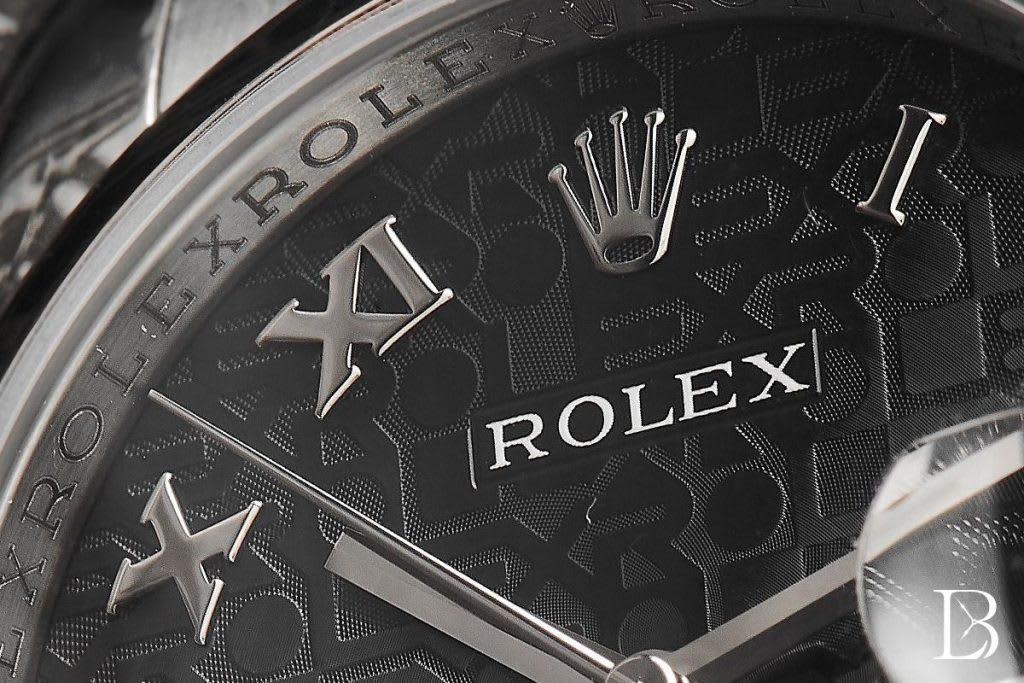
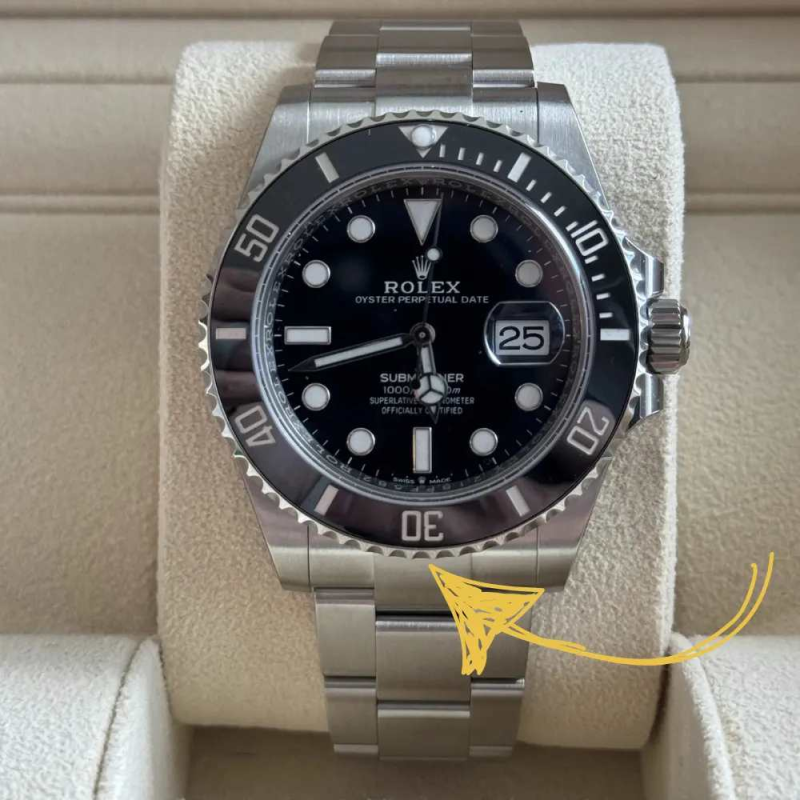
Modern Rolex watches from 2008 onward feature serial numbers engraved exclusively on the rehaut (the inner bezel ring between the crystal and dial, visible at 6 o’clock).
How to find it:
- Look at the watch at an angle (roughly 45°) to your eye level
- Look just inside the crystal, between the dial and the crystal edge
- At approximately 6 o’clock position, you’ll see alphanumeric characters laser-engraved into the bezel ring
- On modern watches (post-2010), these appear as 8 characters, often mixing letters and numbers: “OT23Q257”, “G456B789”, etc.
The rehaut location is advantageous because it’s protected under the crystal from bracelet wear and weather exposure, and verification requires only removing the bracelet partially for angled visibility—no need for full bracelet removal.
The Dating Chart: Sequential Serial Numbers (Pre-2010)
For watches manufactured before 2010, serial numbers followed a predictable sequential system with letter prefixes beginning in 1987. This allows reasonably precise dating to within a specific year.
Rolex Serial Number to Production Year Chart:
| Letter Prefix | Production Year | Letter Prefix | Production Year |
|---|---|---|---|
| R | 1987 | T | 1996 |
| L | 1989 | U | 1997 |
| E | 1990 | A | 1999 |
| X | 1991 | P | 2000 |
| N | 1991 | K | 2001 |
| C | 1992 | Y | 2002 |
| S | 1993 | F | 2003 |
| W | 1995 | D | 2005 |
| Z | 2006 | ||
| M | 2007 | ||
| V | 2008 | ||
| G | 2009–2010 (transition) |
How to use this chart:
If your Rolex shows a serial like “M456789,” the “M” prefix indicates it was manufactured in 2007 (approximately). The individual numbers provide production sequence but don’t narrow the date further.
Important caveat: Rolex occasionally ran concurrent serial prefixes. For instance, both “Z” (2006) and “D” (2005) watches appear in 2005–2006 production overlap periods. This means a serial prefix provides approximate year-of-production but not absolute precision.
Numeric-Only Serials (Pre-1987)
Watches manufactured before 1987 used purely numeric serial numbers without letter prefixes. These require consultation of specialized vintage dating charts or Rolex warranty documentation to determine exact production year.
The Random Serial Era: 2010 to Present
In approximately mid-2010, Rolex abandoned sequential numbering entirely, transitioning to randomized alphanumeric serials consisting of 8 characters (letter + 7 mixed alphanumerics).
Examples of modern random serials:
- OT23Q257
- 12345J78
- 345X29VN
- G456B789
This randomization serves a critical purpose: preventing counterfeiters from predicting and replicating sequential numbers.
The critical implication: You cannot reliably date a modern Rolex manufactured after mid-2010 using only the serial number.
To determine production year for post-2010 watches, you need:
- Warranty card with purchase date (indicates when sold, not when manufactured, but provides reasonable approximation)
- Original box with production codes (sometimes contains manufacturing information)
- Consultation with authorized Rolex dealers (they have access to proprietary databases)
- Dial and case reference information (knowing the specific reference number—e.g., 116610LN—helps narrow production years when combined with movement variants)
Unfortunately, many pre-owned watches are sold without original papers, making precise post-2010 dating essentially impossible.
Bracelet Clasp Codes: Secondary Authentication
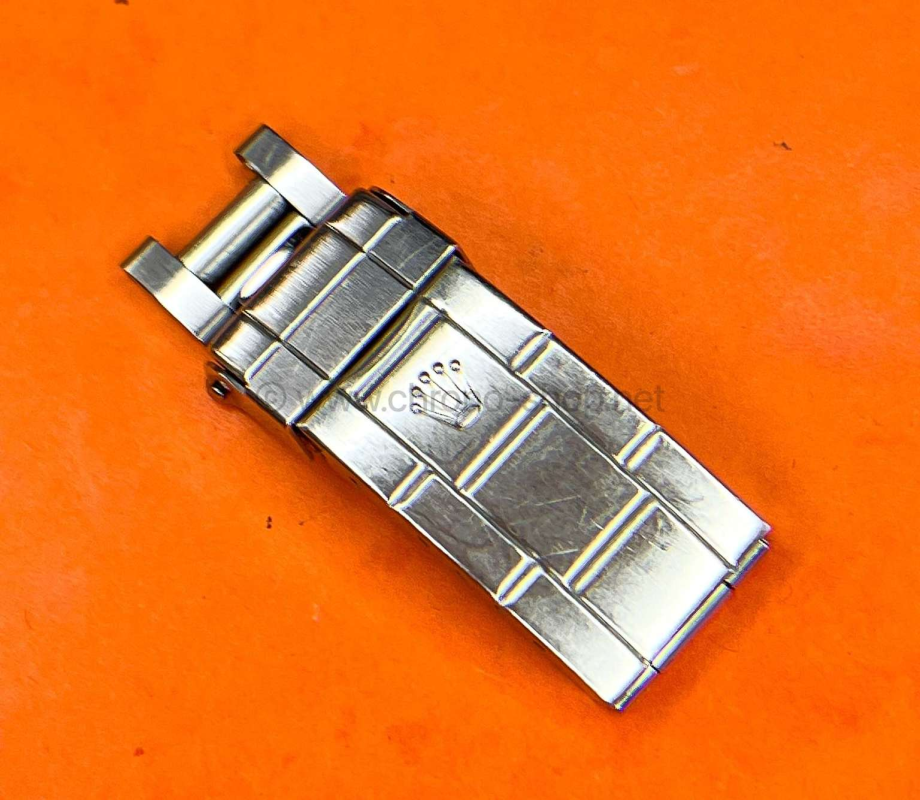
Rolex bracelet clasps contain their own manufacturing date codes, providing a secondary verification method that the bracelet matches the watch’s era.
Finding the Clasp Code:
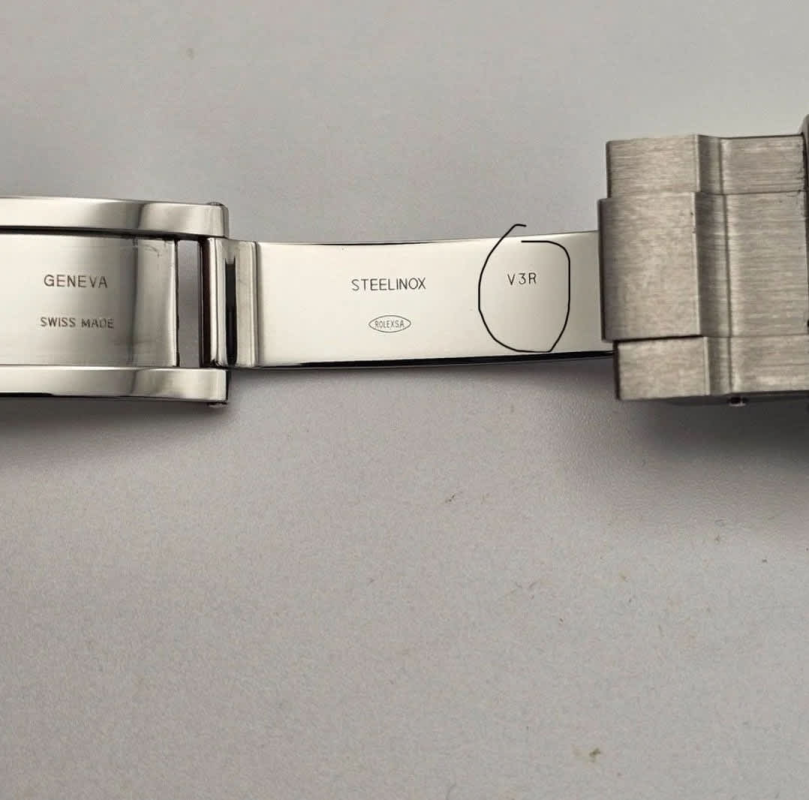
Open the bracelet clasp completely (most have a folding mechanism). Look inside the clasp blade for stamped alphanumeric characters—typically appearing as a letter and two or three digits: “K11”, “CL10”, “OP2”, etc.
The first letter represents the year (using the same chart as case serials), and the numbers represent the month (1–12, where 1 = January, 12 = December).
Example: A clasp code “Z6” indicates June 2006 production.
Why Clasp Codes Matter:
When a bracelet clasp code significantly predates or postdates the case serial, it suggests the bracelet has been replaced—either due to damage, owner preference, or potentially more concerning reasons.
A case from 1998 paired with a clasp from 2012 indicates modification. This doesn’t automatically indicate counterfeiting (many watches receive replacement bracelets legitimately), but it affects collectibility and originality valuation.
Matching clasp and case dates (within 2–3 years) indicates an original, unmolested watch—a significant valuation premium for collectors.
Critical Safety Warning: Never Post Your Full Serial Number Online
Never post your complete serial number on public forums, social media, or internet marketplaces—even partial images in watch photos.
Why this matters:
Sophisticated counterfeiters actively monitor watch communities, collecting real serial numbers from authentic watches displayed online. They then replicate these exact numbers on their counterfeit pieces, creating convincing documentation and confidence for unsuspecting buyers.
A counterfeiter armed with your specific serial number can:
- Create fake warranty cards matching your exact number
- Produce counterfeit boxes and documentation using your number
- Sell multiple “cloned” watches using your authentic serial
Best practice:
When photographing your Rolex online (whether for selling, authentication requests, or community sharing), always carefully edit the serial number from photos—either by pixelating, blurring, or cropping it out completely. Many watch community moderators now automatically remove posts containing visible serial numbers.
Distinguishing Serial from Reference Numbers
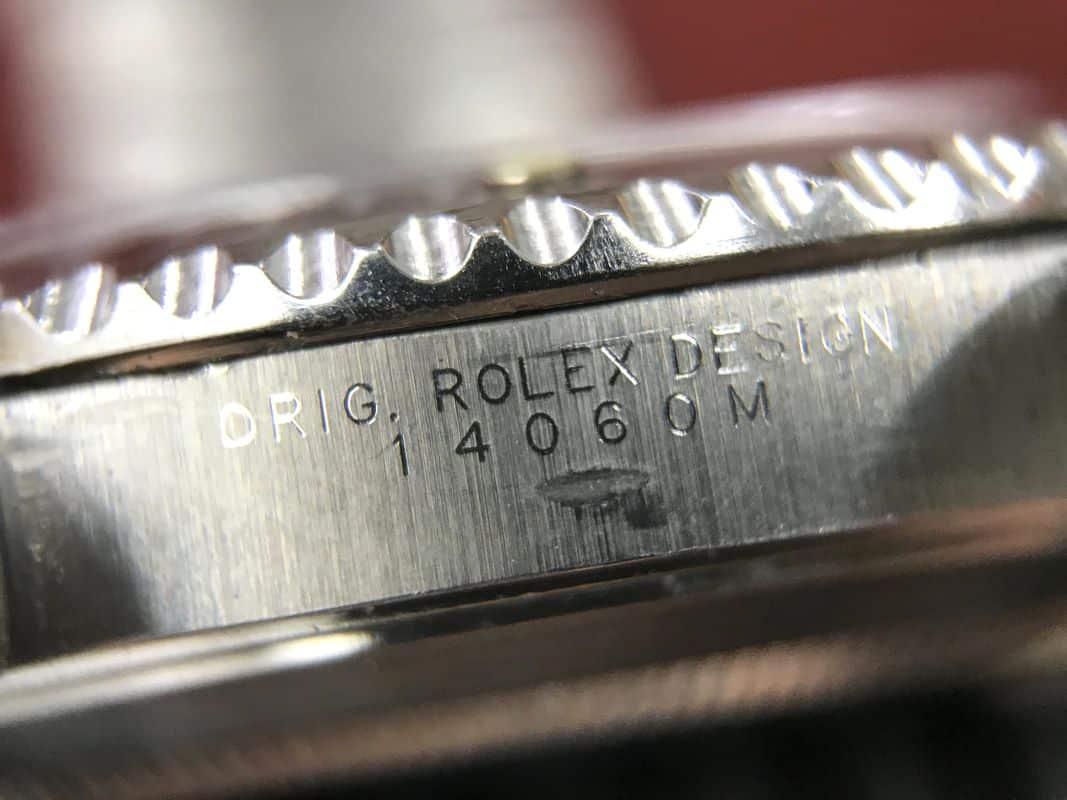
Collectors frequently confuse serial numbers with reference numbers—two distinct identifiers that serve different purposes:
Reference Number (Model Identifier):
- Located between lugs at 12 o’clock
- Identifies the specific watch model: Submariner, Datejust, GMT-Master II, etc.
- Indicates specifications: bezel type, material, dial configuration
- Format: 4–6 digits (example: 116610LN = Submariner Date, steel, no-date configuration)
- Remains constant across production run
Serial Number (Unique Identifier):
- Located between lugs at 6 o’clock (pre-2005) or on rehaut (post-2008)
- Unique to individual watch
- Indicates approximate production year
- Different for every watch produced
Both numbers are essential for authentication, but they serve distinct authentication purposes.
Engraving Quality: Spotting Counterfeits
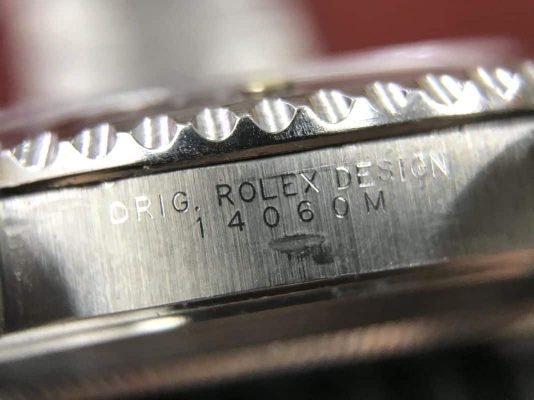
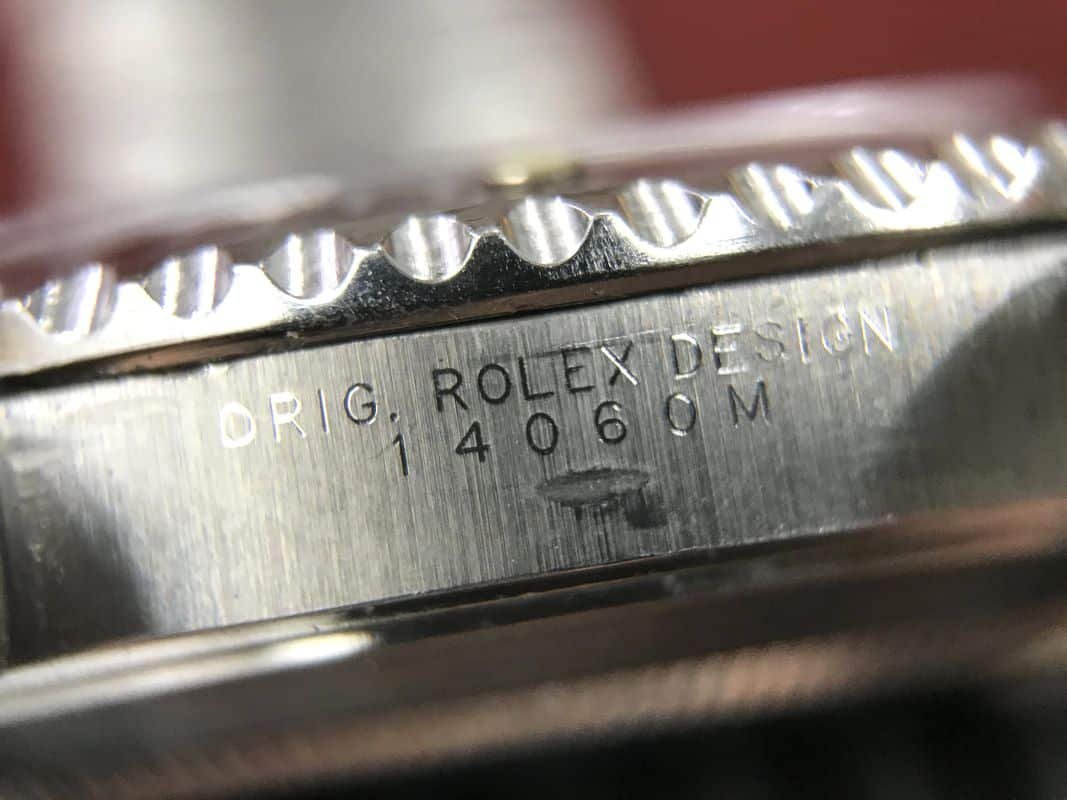
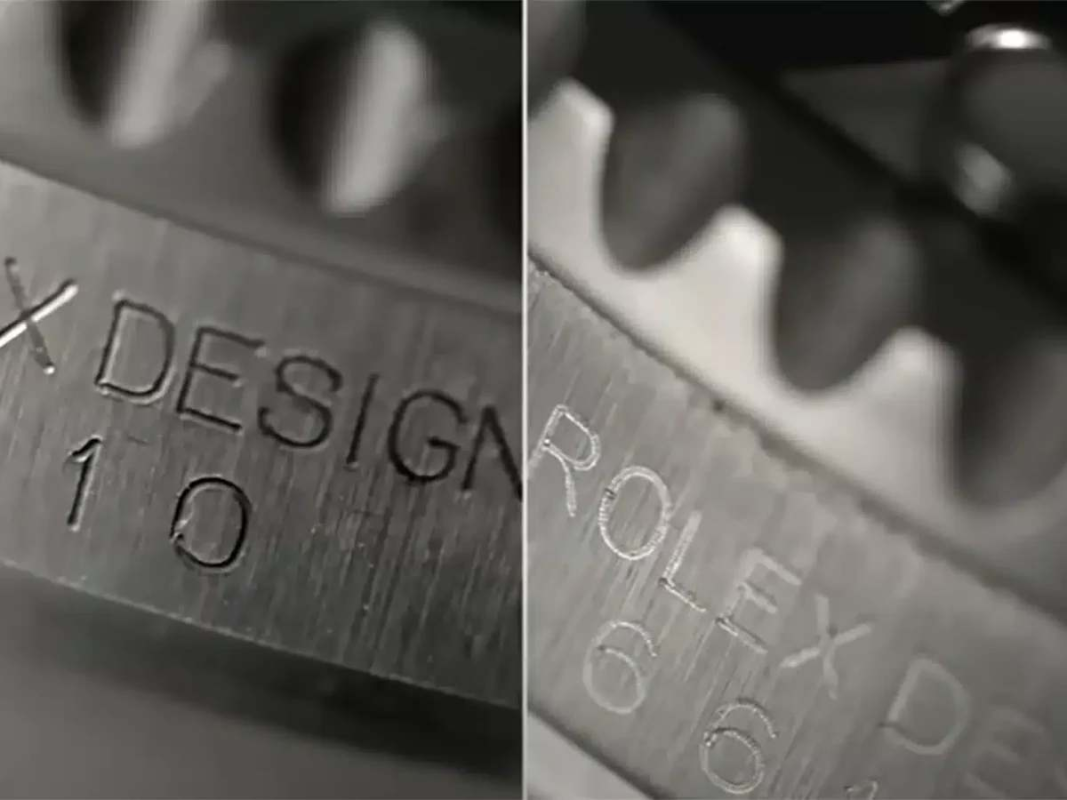
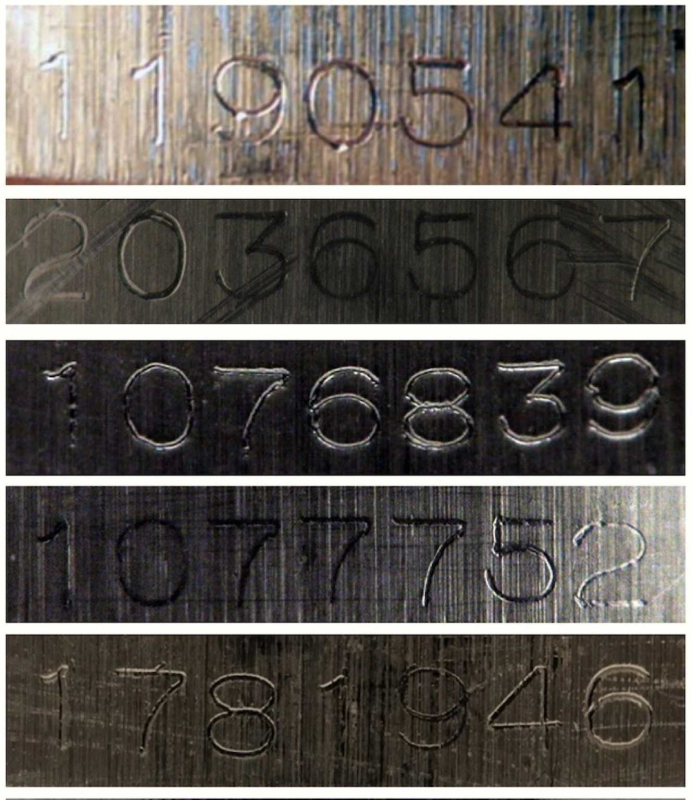
One critical authentication factor often overlooked: authentic Rolex engravings display consistent depth, spacing, and clarity.
Authentic serial number characteristics:
- Uniform depth across all digits
- Consistent font size and spacing
- Sharp, clean edges on each character
- Even baseline alignment
- No obvious tool marks or irregularities
Red flags indicating counterfeiting:
- Inconsistent character depth (some digits pressed deeper than others)
- Wobbly or uneven baseline
- Blurry or fuzzy character edges
- Irregular spacing between numbers
- Visible scratch marks around the engraving
Counterfeiters often struggle with consistent engraving depth because authentic Rolex equipment uses proprietary techniques and precise machine calibration.
Case Back Information: Additional Authentication Details
Modern Rolex case backs (post-2000) are screw-down and feature specific engraved text providing model information.
Look for:
- Reference number (matching the number between lugs at 12 o’clock)
- “ROLEX” crown logo (perfectly centered and properly proportioned)
- Text quality (identical to quality standards of case serial engravings)
- Specific model designation (e.g., “SUBMARINER DATE”, “GMT-MASTER II”)
Counterfeit red flags on case back:
- Mismatched reference numbers versus case lugs
- Poorly executed crown logo
- Inconsistent text engraving quality
- Missing or incorrect specifications
Final Verification: Using Serial Numbers Properly
When purchasing pre-owned Rolex watches, verify the serial number matches the watch’s documented history through:
- Requesting seller documentation (warranty card, box, receipts)
- Photographing the serial number (request for your records only—don’t post publicly)
- Cross-referencing production timeline with known reference variants
- Checking bracelet clasp codes for date consistency
- Consulting authentication services if concerned about counterfeiting
- Verifying case back information matches reference numbers
- Inspecting engraving quality under magnification
Understanding where your Rolex serial number is located, how to interpret it, and why protecting it matters distinguishes informed buyers from those vulnerable to counterfeiting schemes.
Your serial number represents your watch’s unique identity. Treat it with appropriate security.
 Free Shipping for all orders