


Nov
Let’s be honest—if you’re standing in a watch boutique deciding between a Rolex Datejust and a Rolex Day-Date, you’re not just choosing between two watches. You’re deciding between two completely different lifestyle statements. The Datejust whispers, “I’ve got impeccable taste and practicality.” The Day-Date President screams, “I’ve arrived.” One is the watch you wear every day for the next decade. The other is the watch that changes how people perceive you the moment it catches the light on your wrist.
The catch? They look almost identical at first glance. Both are classic round watches with date windows. Both have fluted bezels and that unmistakable Rolex crown. So what’s really going on here, and why does the Day-Date cost three times as much?
The Fundamental Difference: Material = Everything
Here’s where everything changes: The Datejust comes in stainless steel. The Day-Date does not.
That single fact explains roughly 70% of the price difference between these two watches. The Datejust offers flexibility—you can buy it in 904L stainless steel (the most popular and “affordable” option), two-tone Rolesor (steel case with gold accents), or solid gold. The beauty of this is that you’re making a lifestyle choice based on budget and preference, not necessity.
The Day-Date, meanwhile, is exclusively precious metal: 18k yellow gold, 18k white gold, 18k rose gold (Everose), or 950 platinum. There is no stainless steel Day-Date in modern Rolex production. Period. The brand deliberately positions this as their flagship luxury timepiece, and that material exclusivity is fundamental to its DNA.
Think about what this means. A Rolex Datejust in stainless steel retails for approximately $7,650–$8,000. A Rolex Day-Date 36mm in yellow gold runs about $31,350. A Day-Date 40mm costs $34,850. That’s not a price difference—that’s entering an entirely different watch category, and precious metal is the culprit.
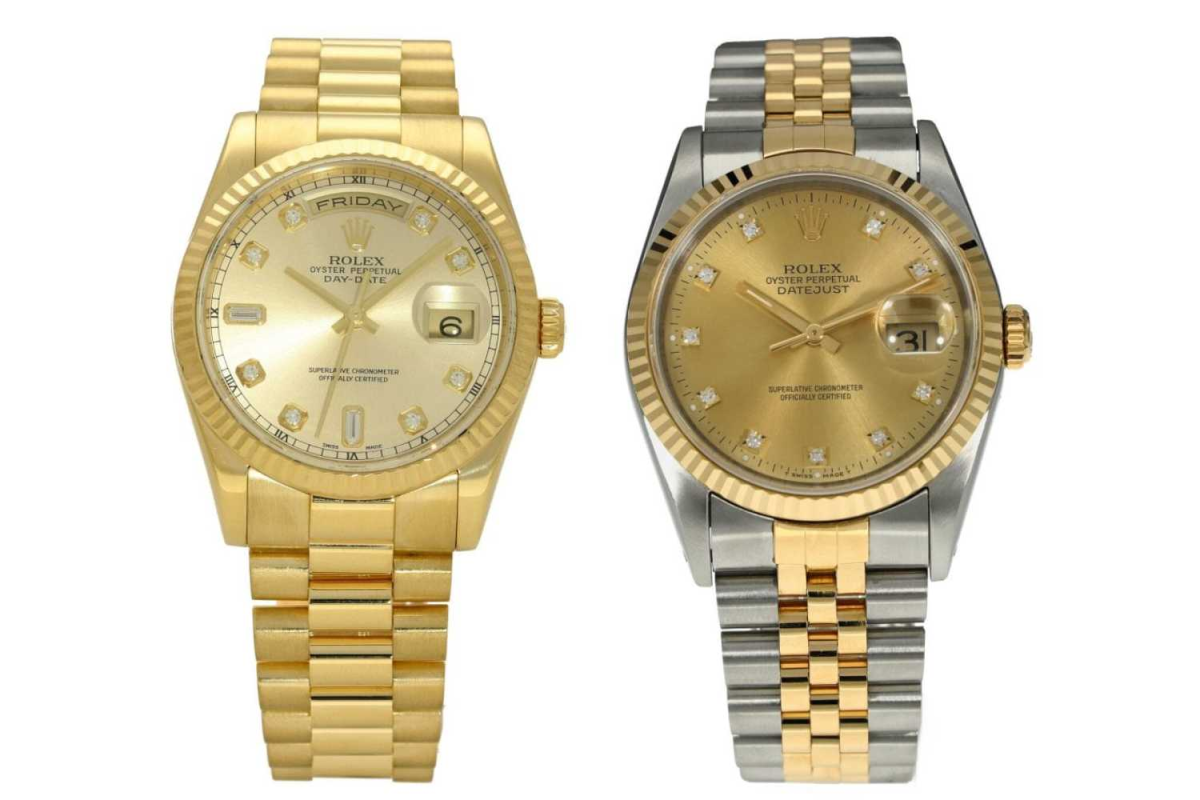
The Complication: Date vs. Day-Date
Functionally, here’s what separates them:
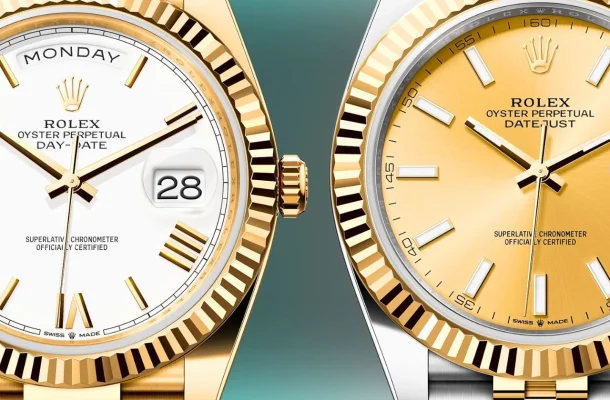
The Datejust displays only the date—a number from 1–31 appears in a window at the 3 o’clock position, magnified by Rolex’s Cyclops lens (that magnifying bubble on the crystal).
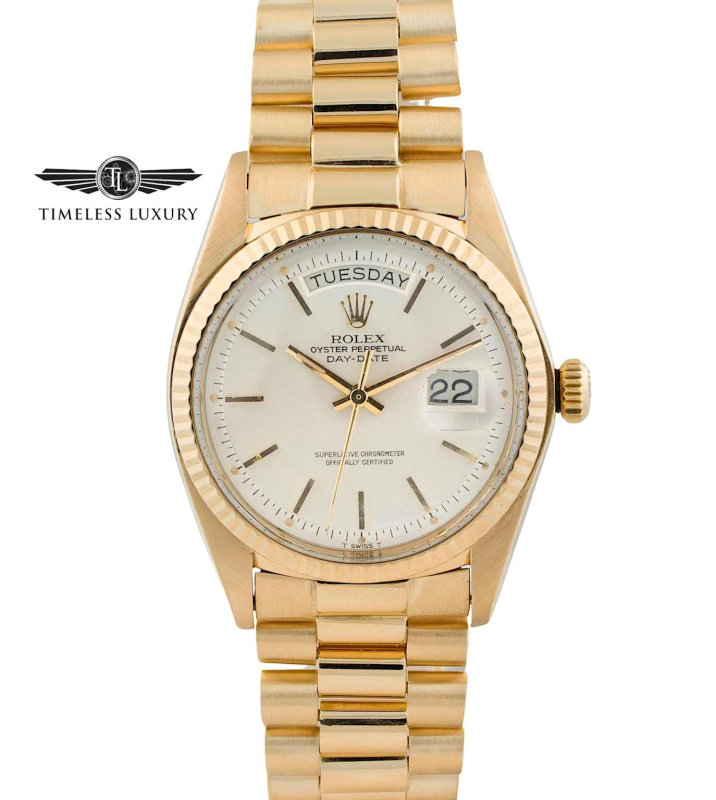
The Day-Date displays both the full day of the week AND the date. The day appears spelled out in full (Monday, Tuesday, Wednesday, etc.) in an arc-shaped window at 12 o’clock, while the date sits at 3 o’clock just like the Datejust. This isn’t a minor complication—it makes the Day-Date the world’s first wristwatch to show the complete day of the week in full text.
Here’s the really clever part: Rolex offers this day-complication in 26 different languages on the Day-Date. Monday becomes Montag (German), Lundi (French), Lunedi (Italian), or Maandag (Dutch). This flexibility is extraordinary—you can literally customize your Day-Date to display in your native language. That’s why dignitaries, diplomats, and international business leaders favor this watch—it speaks literally and figuratively across borders.
The Bracelets: Jubilee vs. President
Here’s where personality enters the equation.
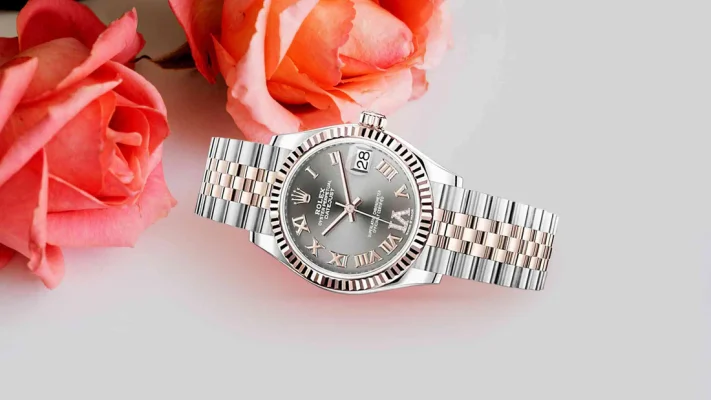
The Datejust typically comes with one of two bracelet options: the Jubilee or the Oyster. The Jubilee is the iconic five-link design with intertwined center links that create an intricate, almost delicate appearance despite being remarkably durable. The Oyster is sportier—three-link construction, more linear, more athletic. Both are comfortable for extended wear, but they deliver completely different aesthetics.
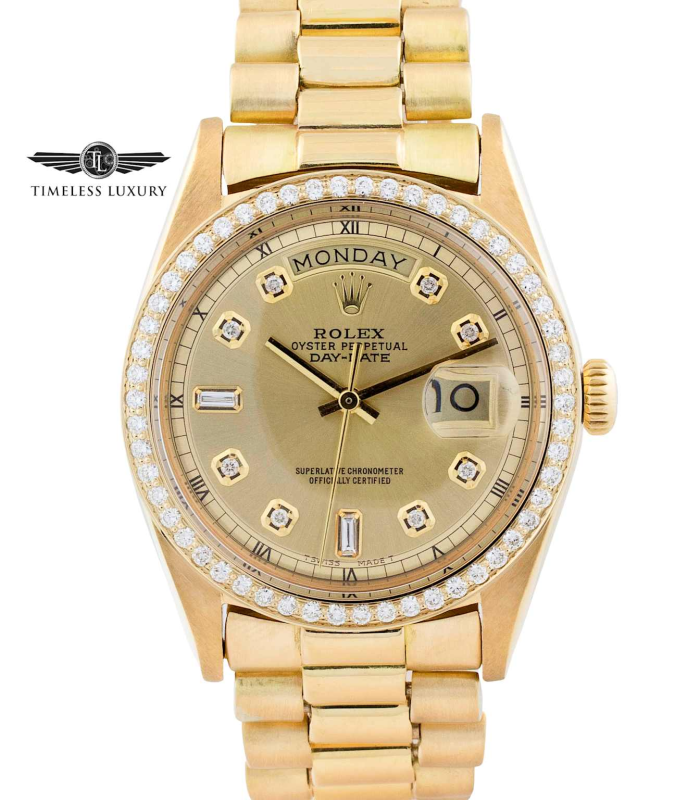
The Day-Date comes almost exclusively with the President bracelet, an elegant three-piece link design featuring semi-circular links that flow together seamlessly. The President bracelet is exclusive to the Day-Date and a few other precious metal models; you won’t see it on steel sports watches.
The President bracelet isn’t just prettier—it’s engineered for luxury comfort. The three-piece construction distributes weight evenly, and many Day-Date owners report that wearing it actually feels lighter than the weight statistics suggest because the weight distributes so naturally across the wrist. The President’s hidden clasp (no visible latch bar) creates visual continuity around the wrist, which is why it feels so refined on formal occasions.
The Jubilee, meanwhile, offers superior flexibility. The five-link construction moves more freely, making it ideal for active daily wear. It conforms to wrist movement better, which is why many people find the Jubilee more comfortable for extended wear, especially in hot weather when bracelets tend to feel restrictive. However, Jubilee bracelets show wear more visibly over time—the polished center links will scratch with daily use, developing a patina that some collectors embrace and others relegate to the polisher once yearly.
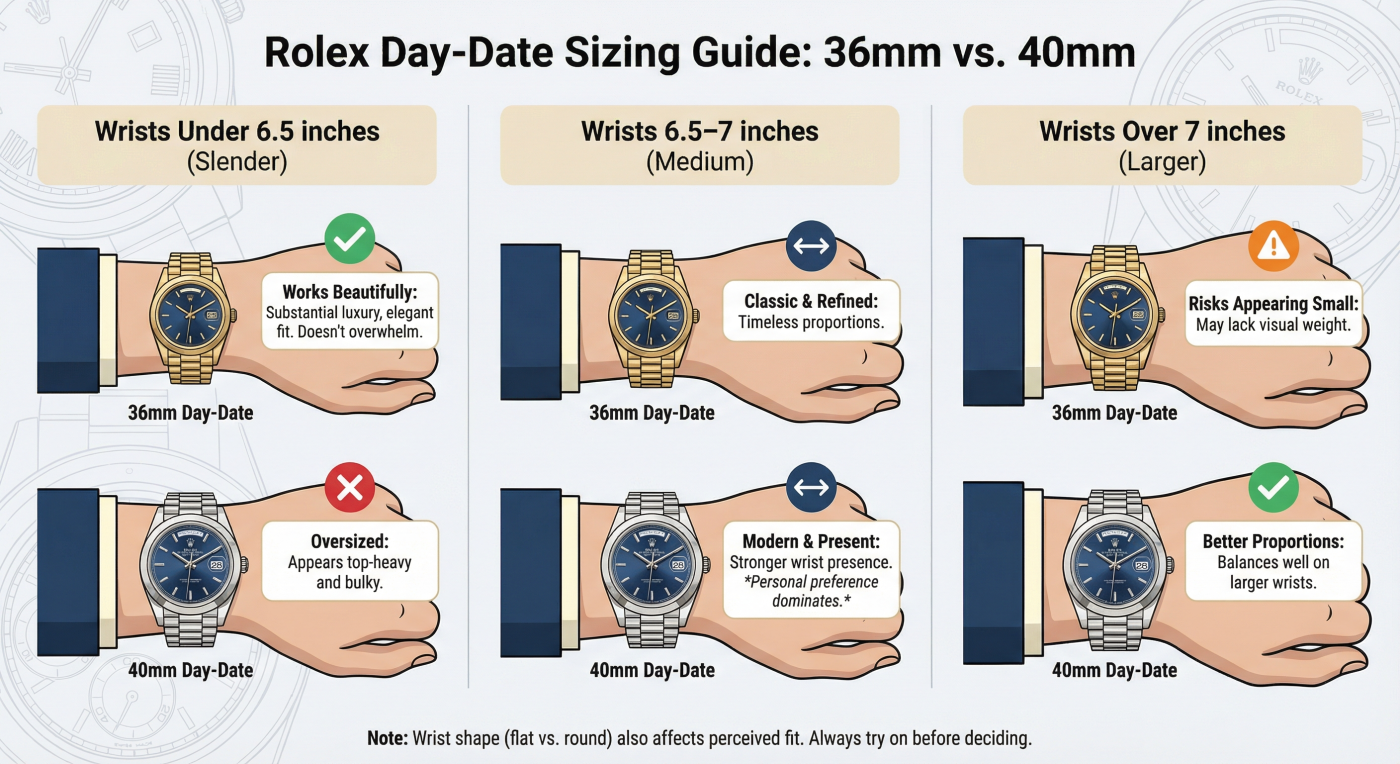
Size Matters: How They Fit on Real Wrists
The Datejust comes in 26mm, 28mm, 31mm, 36mm, and 41mm sizes. This is genuinely thoughtful—you can get a Datejust appropriate for virtually any wrist size and gender.
The Day-Date comes in 36mm and 40mm only (vintage models came in 39mm). This limitation reflects its original positioning as a dress watch for presidents, dignitaries, and CEOs—men of power in the 1950s–1960s wore 36mm watches, and that aesthetic carries forward.
Here’s where personal wrist size actually matters:
- Wrists under 6.5 inches: The 36mm Day-Date works beautifully—it’s substantial enough to feel luxury but elegant enough not to overwhelm. The 40mm would look oversized and top-heavy.
- Wrists 6.5–7 inches: Both work. The 36mm feels classic and refined; the 40mm feels modern and present. Personal preference dominates.
- Wrists over 7 inches: The 40mm Day-Date provides better proportions. The 36mm risks appearing small on larger wrists.
The weight difference is real. The 36mm Day-Date weighs approximately 174 grams, while the 40mm reaches 204 grams—a 30-gram difference that you genuinely feel during extended wear. That’s why many collectors note that the 36mm is actually more comfortable for all-day wearing, despite its smaller appearance.
Movement Technology: 3235 vs. 3255
Both the modern Datejust and Day-Date utilize Rolex’s cutting-edge 32xx family of movements. The Datejust uses the Caliber 3235, while the Day-Date uses the Caliber 3255.
These movements are nearly identical in practical terms, both featuring:
- 70-hour power reserve (absolutely excellent by mechanical standards)
- Chronergy escapement for improved energy efficiency
- Parachrom hairspring for magnetic resistance
- -2/+2 seconds per day accuracy certified by Rolex’s Superlative Chronometer standard
- Automatic self-winding mechanism
The only meaningful technical difference is that the 3255 includes a double quickset mechanism, allowing you to adjust the day and date independently without manually advancing through every day to reach the desired setting. This is convenient but not revolutionary—most people set their watch once and leave it alone.
From a practical standpoint, both movements are engineering excellence, and you’ll never notice a functional difference in real-world use.
Status: Subtlety vs. Statement
This is where it gets psychological, and it’s the real reason anyone buys a Day-Date over a Datejust.
The Datejust is the quintessential daily luxury watch. It works in the boardroom, at the beach, on a date, at the gym. It signals taste and means “I made good choices.” Businesspeople, professionals, and practical luxury enthusiasts wear Datejusts because they’re beautiful, reliable, and universally appropriate.
The Day-Date, colloquially called the “President’s Watch,” carries weight beyond horology. This watch has graced the wrists of actual presidents—Harry Truman, Ronald Reagan, Bill Clinton. It’s worn by CEOs, diplomats, and power players because the watch communicates something without words: “I’ve transcended the need for practicality. I can wear solid gold daily because my lifestyle accommodates it.”
This isn’t cynicism—it’s just honesty. A Day-Date on the wrist says, “This person has the resources and confidence to wear a precious metal watch openly.” A Datejust says, “This person has excellent taste and practical judgment.” Both are excellent statements. They’re just different statements.
The Day-Date also generates visible reactions. Gold catches light. The fluted bezel sparkles. People notice. Datejust wearers often appreciate the subtlety of their watch being equally excellent but less “loud.”
Which Should You Actually Buy?
Choose the Datejust if:
- You want a watch that transitions seamlessly from 6 AM gym session to 6 PM dinner
- You have a variable lifestyle—casual to formal, active to sedentary
- You prefer the Jubilee’s comfortable flexibility over the President’s substantial presence
- You want the option to wear steel (which is genuinely practical for daily wear)
- You appreciate quality without needing it to make a public statement
- Budget is a consideration—even modest Datejusts outperform most watches at their price point
Choose the Day-Date if:
- You’ve reached a professional status where wearing gold daily is appropriate or expected
- You want a watch that commands presence and garners compliments
- You appreciate historical significance and prestige
- The President bracelet’s refined comfort genuinely appeals to you
- You want the day-complication for genuine utility (frequent international travel)
- Budget is secondary to the psychological satisfaction of owning the ultimate luxury watch
The Honest Verdict
Both watches are exceptional Rolex instruments built to last decades. The Datejust is the superior practical choice—more versatile, more comfortable for varied use, more financially sensible. The Day-Date is the superior emotional choice—more prestigious, more exclusive, more “arrived.”
If you’re still deciding after reading this, here’s the real test: Walk past a store window and look at your wrist. If you imagine a gold President bracelet catching the light and it makes you smile, you already know which watch you want.
The money—three times as much for the Day-Date—buys you that feeling every single day. For the right person, that investment pays dividends in satisfaction you didn’t expect.
Quick Reference Comparison Table:
| Feature | Datejust | Day-Date President |
|---|---|---|
| Materials | Steel, Rolesor, Gold, Platinum | Gold (yellow, white, rose), Platinum only |
| Sizes | 26mm–41mm | 36mm, 40mm |
| Bracelet | Jubilee, Oyster, or President | President (exclusive) |
| Complication | Date only (3 o’clock) | Day + Date (12 o’clock + 3 o’clock) |
| Languages | N/A | 26 languages available |
| Movement | Caliber 3235 | Caliber 3255 |
| Power Reserve | 70 hours | 70 hours |
| Retail (36mm) | ~$7,650–$31,000+ | $31,350 |
| Retail (40mm) | ~$8,200–$35,000+ | $34,850 |
| Best For | Daily versatility | Prestige & status |
| Comfort | Excellent flexibility | Refined substance |
| Statement | “I have excellent taste” | “I’ve arrived” |
 Free Shipping for all orders